At a time when India is being criticised globally for failing to welcome its neighbour’s new statute, one of its top political experts has claimed Nepal’s constitution is superior to that of its Indian counterpart.
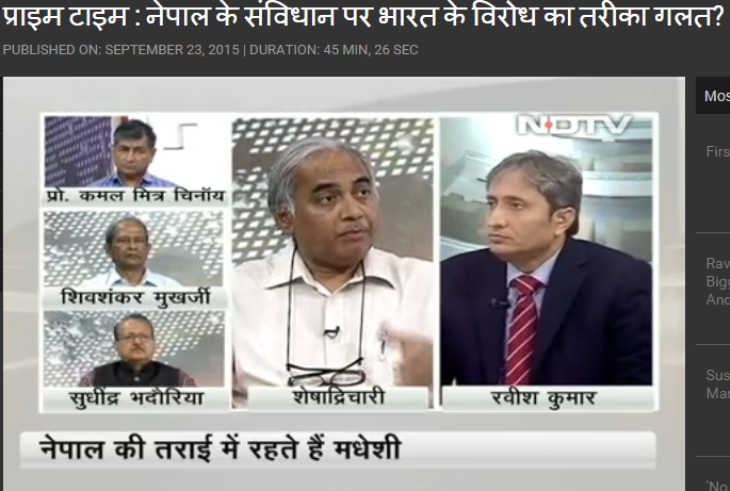
Speaking on a NDTV talk show, Professor Kamal Mitra Chenoy of Jawaharlal Nehru University (JNU) further remarked that India’s sending of Prime Minister Narendra Modi’s special envoy to Nepal harmed India more than anyone else. Referring to a newspaper article in an unnamed English daily, another participant of the programme Sudhindra Bhadoriya urged India not to act as a ‘big brother’. He said the fact that Nepal is a sovereign nation should not be forgotten.
Participants of the programme supported Nepal’s decision to promulgate its own constitution but cautioned Nepal must listen to the voice of the Madhesi and Tharu people.
“There is no comparison between their constitution and the Indian constitution. They have proportional representation, they have reservation for women and indigenous people,” Professor Chenoy said.
The sharp statement of the renowned political commentator surprised the host of the talk show, prompting him to seek clarification, “Are you saying better than ours?” The professor reconfirmed, “Better than ours”.
That the relationship between India and Nepal is primarily a people to people one and that India’s intellectual circle disproves its government’s handling of the constitution crisis was well evidenced during the show.
The JNU professor also remarked that the South Asian giant should have let the situation calm down in Nepal and then use diplomacy to put forward its concern, when things have settled down in the Himalayan nation.
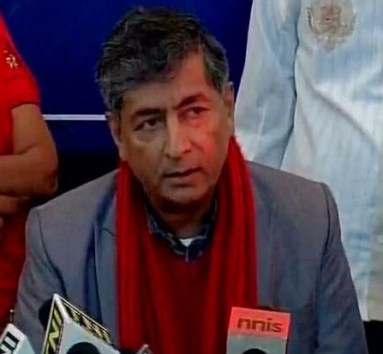
Professor Chenoy
In the mean time, India’s foreign ministry has denied that the country ever put forward the list of seven recommendations for the amendment to the now-promulgated constitution. The Indian government was reacting to an article published by the Indian Express which claimed the South Asian giant had asked Nepal to make seven changes to the statute which has further exacerbated anti-India feeling in Nepal. “GOI has not handed over any list of specific Constitutional amendments or changes to the Government of Nepal. Without being prescriptive on specific clauses, and as already stated earlier, we continue to urge that issues on which there are differences should be resolved through dialogue in an atmosphere free from violence, and institutionalized in a manner that would enable broad-based ownership and acceptance,” read the response issued by the spokesperson for the Indian foreign ministry.
(from southasia.com.au)